Beyond Streamlining: Drag reduction in the 21st century
Eric, I happen to build snowboards using the technique you describe, with a printed topsheet material providing finish, graphics, and water/UV protection. It's a real possibility we'll soon see planes with such skins. Some mold-built wings are, functionally, at least, already there with various coatings and scrims in-mold. In all cases, keeping the weight down is a deal-breaker needing improvement.
I'm glad you place a priority on the control surface gap. It's not just the gap discontinuity causing flow disruption; the real drag source is the availability of a route for pressure equalization to be occurring between high and low-pressure areas below and above the wing. This flow widens and turbulates the boundary layer, invisibly increasing the 'apparent' aft wing thickness. Sealing the gap adds complexity and expense while introducing a liability into the system. Ideally, in the planes of the future, we simplify and reduce parts count, so your high-tech 'synthetic muscle' actuator may have a home someday. For now, we can imagine that a controllable wing without a gap is better than one with, especially if it has simplified and reduced weight while maintaining present safety and reliability.
Winglets: An exploration of drag reduction and lift enhancement
You wrote that winglets reduce drag, add thrust, and increase lift. Well, not necessarily. Now seems as good a time as any to introduce another important but wild concept that happens to be true. I'll come back to winglets shortly. First thing we learn in aerodynamics is that there are four fundamental forces of flight: Thrust, lift, drag, and gravity. In steady level flight, thrust = drag and lift = weight. This statement is almost completely responsible for a frame of mind and a frame of reference that guarantees a poor result when dealing with viscous fluids. We may not fully understand why for quite a long time, but it will become perfectly clear in the future.

There are only TWO fundamental forces of flight: Gravity, and viscous fluid inertia. Because low viscosity fluids swirl when pushed upon, drag, lift, and thrust become interchangeable and quite inseparable, even when we design for one or the other. We use four representative vectors for easy bookkeeping, and I'm not arguing to toss the math (yet), but the fact is that most aircraft are designed as if lift was lift, and drag was drag. It isn't for long.
As the aircraft drags previously stationary air along with it, the air swirls. As the plane pushes an air mass downward, which it must do in order to fly, air swirls in to take its place. Responding insightfully to these behaviors can create lift with surfaces that are not wings and reduce drag with surfaces that add greatly to the aircraft wetted area. Future planes even create LIFT by pushing the aircraft down! I'll be posting a brief intro to the implications of the Gabrielli-von Karman limit shortly. What it shows is that we've only been effective in designing efficient aircraft with long wingspan (gliders under 100 mph) and with large commercial jets (over 400 mph). The reason we have failed to reach achievable high L/D at useful speeds under 400 mph is due to ignoring the critical influence of low viscosity.
The role of winglets and non-planar wing design
Going fast enough renders the air a near-solid, going slowly allows weaker structures of high aspect ratio. Winglets opened the modern exploration of non-planar wing design, a technology acting in harmony with viscosity in three or four dimensions. (Biplanes and various flavors of polyhedral did so long ago.) Winglets can provide a high span efficiency by acting against the high-velocity swirl at wingtips. Optimizations reveal that winglets are most effective after a span limit has been reached. Yet while span extension will deliver the most drag reduction, it is at the expense of a structure suitable for higher speeds.
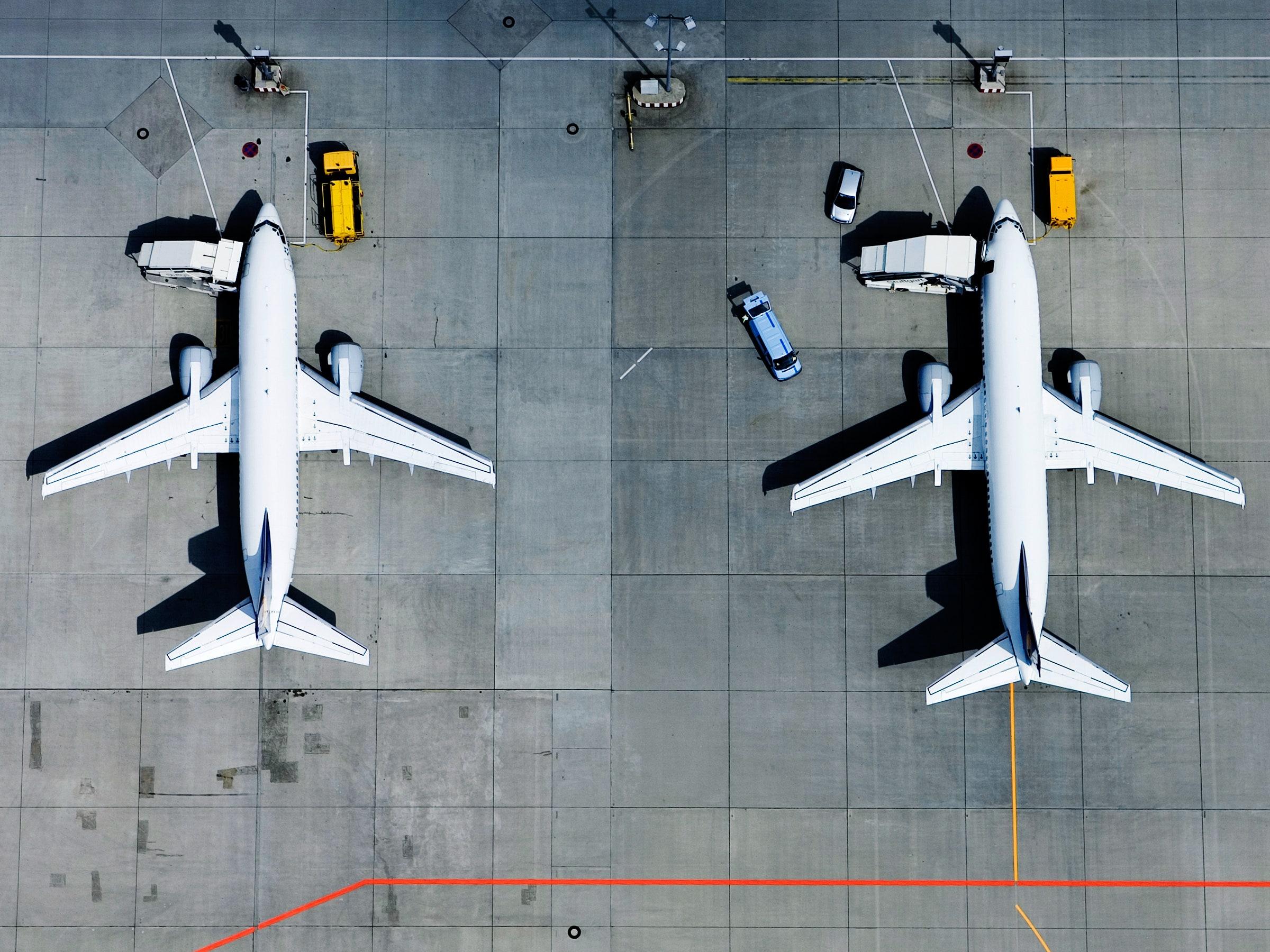
Creating thrust with a winglet is generally sub-optimal. A tall winglet, located to also provide lateral directional stability, provides very high span efficiency, which is one of the major advantages to Rutan derivative canards. Unfortunately, the canard configuration itself reduces this advantage. The promise of non-planar concepts one or two steps beyond the winglet have yet to be fully explored, but a promising non-box-wing technology is now patent-pending, with particular application to efficient flight in the 200-400 mph regime.
As aviation continues to evolve, it's crucial to consider novel approaches to enhance aerodynamic efficiency. By understanding the complex interplay between pressure differentials, airflow, and viscosity, aircraft designers can unlock new possibilities for drag reduction and lift enhancement. Embracing non-planar wing designs and exploring the potential of technologies like high-tech synthetic muscle actuators and innovative winglet configurations can lead to more efficient and sustainable air travel.
In conclusion, the future of aviation lies in the ongoing pursuit of drag reduction and improved performance. Through collaboration and experimentation, the industry can overcome existing limitations and usher in a new era of aerodynamic excellence. Just as the hospitality industry continues to innovate and provide exceptional experiences for travelers, aviation too must strive for continuous improvement in its quest for streamlined and efficient flight.